

Stationary Bicycle Exercise
Add a review FollowOverview
-
Founded Date August 24, 1910
-
Sectors Construction
-
Posted Jobs 0
-
Viewed 2

Company Description
Are Stationary Bike As Important As Everyone Says?
The Ultimate Guide to Stationary Bikes: Pedaling Toward Better Health
In an era where convenience often dictates lifestyle options, discovering effective methods to remain fit without leaving your home has become a priority for lots of. Amongst the myriad of home health club devices offered, the stationary bicycle remains a timeless classic. Whether used for high-intensity period training (HIIT), steady-state cardio, or gentle rehabilitation, indoor cycling uses a versatile and low-impact path to cardiovascular health.
This detailed guide checks out whatever one requires to understand about stationary bikes, assisting fitness lovers and novices alike navigate the marketplace and maximize their exercises.
Why Choose a Stationary Bike?
Indoor biking has actually risen in appeal, and for excellent factor. Unlike running, which places high stress on the joints, biking offers a smooth, circular movement that is gentle on the knees, hips, and ankles.
Key Benefits of Stationary Cycling:
- Low-Impact Cardio: Minimizes joint pressure while effectively raising the heart rate.
- Lower Body Strength: Targets and reinforces the quadriceps, hamstrings, glutes, and calves.
- Benefit: Allows for workouts regardless of weather, traffic, or time of day.
- Calorie Burn: Offers a high-calorie-burning Mini Exercise Bike, helping in weight management and weight loss.
- Mental Health Boost: Releases endorphins, minimizes stress, and enhances total state of mind.
Types of Stationary Bikes
Not all stationary bicycles are developed equivalent. Various designs cater to various physical fitness goals, comfort levels, and areas. Understanding the primary classifications helps users select the ideal maker for their needs.
1. Upright Bikes
Upright bikes carefully simulate the feel of a conventional outdoor bicycle. The rider sits in an upright position, engaging the core and upper body muscles to preserve balance and posture.
- Best for: General fitness, high-intensity period training (HIIT), and recreational riding.
- Pros: Compact footprint, engages core muscles, versatile.
- Cons: Can trigger neck or lower back pressure throughout long sessions for some users.
2. Recumbent Bikes
Recumbent bikes feature a bigger, bucket-style seat with a backrest, positioned behind the pedals rather than straight above them. This design distributes body weight more uniformly.
- Best for: Beginners, older grownups, people with lower neck and back pain, and those going through physical treatment.
- Pros: Exceptional lumbar assistance, highly comfortable, lowers joint pressure.
- Cons: Takes up more flooring area, offers a less extreme upper-body and core good exercise bike.
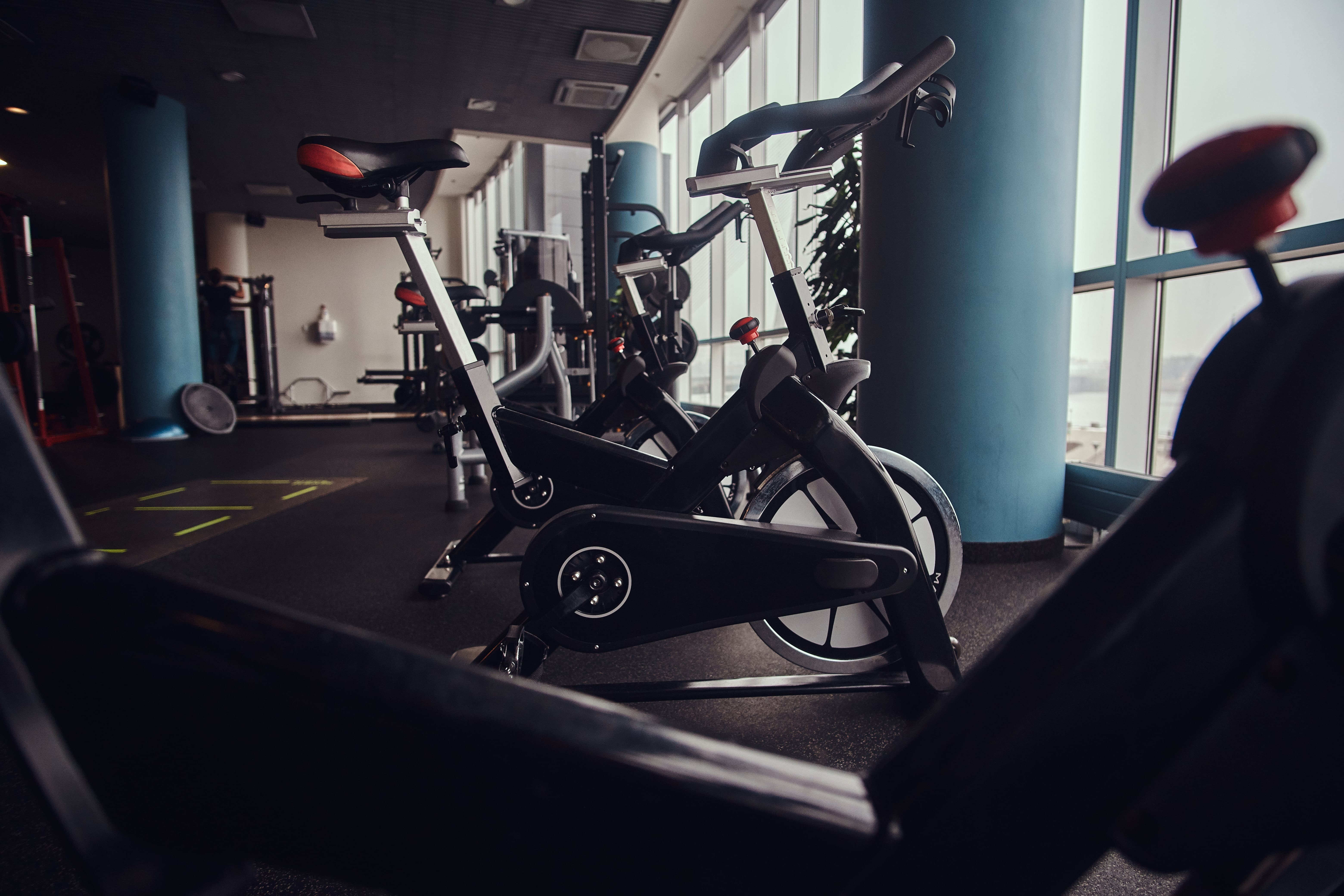
3. Indoor Studio Cycles (Spin Bikes)
Studio cycles are built to reproduce roadway bikes. They feature heavy weighted flywheels, direct-drive resistance, and permit the rider to stand up out of the saddle for hill climbs up and runs.
- Best for: Advanced bicyclists, spin class enthusiasts, and high-intensity cardio seekers.
- Pros: Highly durable, robust resistance systems, allows for out-of-the-saddle riding.
- Cons: Can be unpleasant for beginners; seats are generally narrow and firm.
Comparing Stationary Bike Types
To assist imagine the distinctions, the table listed below breaks down the essential functions of each significant bike type:
| Feature | Upright Bike | Recumbent Bike | Studio Cycle |
|---|---|---|---|
| Primary Focus | General Cardio & & Core Comfort & | Rehabilitation | High-Intensity & & Endurance |
| Seating Position | Upright, vertical | Reclined with backrest | Forward-leaning, athletic |
| Effect on Joints | Low | Extremely Low | Low |
| Area Required | Compact | Moderate to Large | Compact to Moderate |
| Typical Price Range | ₤ 300– ₤ 800 | ₤ 400– ₤ 1,000 | ₤ 600– ₤ 2,000+ |
Resistance Mechanisms: How They Work
The resistance system figures out how smooth the trip feels and how much maintenance the bike will require gradually.
- Friction Resistance: Uses felt or leather pads that clamp down onto the flywheel. While economical, these pads ultimately wear and require routine replacement.
- Magnetic Resistance: Uses magnets placed near the flywheel to create resistance without physical contact. This system is virtually quiet, extremely smooth, and requires nearly no upkeep.
- Air Resistance: Uses a fan wheel where resistance increases the quicker the rider pedals. It supplies a cooling breeze but can be noisy during intense exercises.
Tips for Maximizing an Indoor Cycling Workout
Just sitting on a stationary bicycle and pedaling is an excellent start, however incorporating correct methods and strategies can considerably improve results.
Necessary Workout Strategies:
- Adjust the Bike Properly: Ensure the seat height permits a slight bend in the knee at the bottom of the pedal stroke. Inaccurate seat height can lead to knee pain and inadequacy.
- Incorporate Interval Training: Alternate in between high-resistance sprints and low-resistance healing durations to improve cardiovascular endurance and burn more calories.
- Maintain Proper Form: Keep shoulders relaxed, core engaged, and prevent death-gripping the handlebars.
- Stay Hydrated: Indoor cycling results in heavy sweating. Keep a water bottle within arm’s reach during every session.
- Mix Up the Routine: Combine endurance trips with hill climbs and cadence drills to avoid workout monotony.
Frequently Asked Questions
Can stationary bicycles aid with weight-loss?
Yes. Integrated with a well balanced diet, routine indoor biking creates a caloric deficit, which is vital for weight and fat loss. An energetic 45-minute session can burn anywhere from 400 to 600 calories, depending upon body weight and strength.
Are stationary bikes appropriate for senior citizens?
Recumbent stationary exercise bikes home are extremely popular amongst older grownups. They supply a safe, supported cardiovascular workout that enhances the legs without placing stress on the spine or knees.
How frequently should one utilize a stationary bike?
For general health advantages, going for 150 minutes of moderate-intensity cardio per week– split into 3 to 5 sessions– is perfect. Novices ought to start with 15 to 20-minute sessions and gradually increase period and strength.
Stationary bicycles stay an indispensable financial investment in individual health and health. By providing a safe, effective, and weather-proof technique to improve cardiovascular endurance and lower-body strength, they accommodate practically every physical fitness level. Whether going with the joint-friendly convenience of a recumbent bike home exercise or the sweat-inducing difficulty of a studio cycle, stepping onto an indoor bike is a powerful action toward a much healthier way of life.
